|
Once again, the Dominican Friars gathered in Washington, D. C. on January 21-23, 2010 to witness to the value of human life. In addition to participating in the March for Life, the Dominicans also participated in the National Prayer Vigil for Life, both by attending the Solemn Mass For Life and by leading Lauds and preaching at the conclusion of the all-night vigil.
View a slideshow of pictures from the weekend.
Listen to the homily preached by student brother John Devaney, O. P. at the conclusion of the National Prayer Vigil for Life
The text of Br. John's Homily, "The March of Mercy," is below:
|
|
Read more...
|
|
The Call to Communicate the Truth |
|
|
|
|
A Homily by Fr. Thomas Joseph White, O. P. Sunday, January 24, 2010
Blaise Pascal, the 17th century philosopher, has an aphorism (n. 236) in his book, the Pensées, that reads, “There is enough light to enlighten the elect and enough obscurity to humiliate them. There is enough obscurity to blind the reprobate and enough light to condemn them and deprive them of excuse.”
The elect and the reprobate are terms being used here for processes that do not work in similar or symmetrical ways. The elect cooperate with God’s grace, and all that they have and do that leads to their salvation, they have from God. “What do you have,” says St. Paul, “that you have not received?” (I Cor. 4:7) The reprobate, meanwhile, are not those who are not offered the possibility of life with God, but rather, those who are offered that life but who refuse the offer, and therefore come under deprivation of the light, by their own choice and are without excuse.
|
|
Read more...
|
|
Jesus' Call to Sinners to Follow Him |
|
|
|
|
A Homily by Br. Ignatius Schweitzer, O. P. January 16, 2010
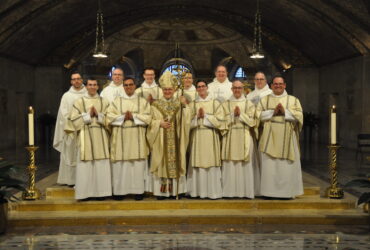
On Saturday, January 9, 2010, Br. Ignatius was ordained to the diaconate. This is the inaugural homily that he preached to the community
Jesus came to call sinners. And what is about these sinners in today’s Gospel that makes them recipients of Jesus’ call? Well, to start with, we see they are set in contrast with some self-righteous Pharisees.
The hardened pride of these Pharisees makes them blind to their need for the Savior who stands in their midst. They are righteous in their own eyes and so are blind to the gift of righteousness sent from the Father. These sinners, on the other hand, know of their need to be saved and so are open to receiving the Savior. So it seems it is the humility of these sinners that is contrasted with the pride of these Pharisees.
|
|
Read more...
|
|
Eli: A Priest Who Produced Good and Bad Fruit |
|
|
|
|
A Homily by Br. Ezra Sullivan, O. P.
January 14, 2010
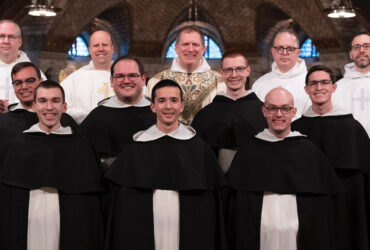
On January 9, 2010, Br. Ezra was ordained to the diaconate. This is the inagural homily that he preached to the community.
As the priest, so the people; as the shepherd, so the sheep. Many spiritual authors tell us that this is a general rule in the life of the Church: if a priest is a fervent man of God, he can help to make his people fervent, but if he is a cold fish, his people will almost invariably become wicked. This is because, as Fr. Joseph Fox likes to say, “Nemo dat quod non got”— if you don’t have it, you can’t give it. When we look to the lives of notable saints and sinners, we can easily find examples of the spiritual principle that good begets good and bad begets worse. Many of St. Dominic’s early followers have been recognized for their holiness, including Sts. Hyacinth and Peter Martyr and Bl. Jordan of Saxony, and on the nuns’ side, Bls. Cecelia, Diana, and Amata. St. Dominic himself came from a holy mother. Similarly, notoriously wicked families are often wicked for generations, as is well-attested in films about the Mafia. So much for examples of the more famous, or infamous as it were, — those on the extreme ends of virtue and vice. But what are we to make of people more like us, those who seem to be neither heroically virtuous nor incorrigibly evil? The priest Eli, presented to us in 1 Samuel chapters 1-4, provides a clue.
|
|
Read more...
|
|
|