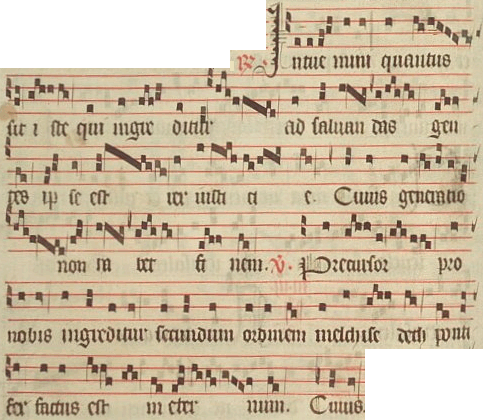
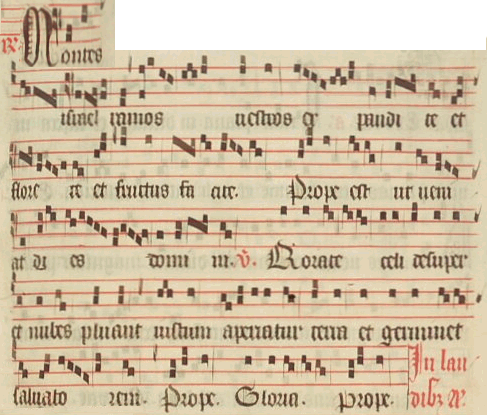
Even Years: St. Augustine, Discourse on Psalm 37, 13-14
| Rugiebam a gemitu cordis mei. Est gemitus occultus qui ab homine non auditur; tamen si tanta occupaverit cor cogitation desiderii cuiusdam, ut voce clariore exprimatur vulnus interioris hominis, quaeritur causa; et dicit homo apud semetipsum: Forte illus est unde gemit, et forte illus illi factum est. Quis potest intellegere, nisi ille in cuius oculis et auribus gemit? Propterea rugiebam, inquit, a gemitu cordis mei, quia homines si quando audiunt gemitus hominis, plerumque gemitum carnis audiunt; gementem a gemitu cordis non audiunt.
| I cried aloud with the groaning of my heart. There is a hidden groaning which human ears cannot catch. However, if a man's heart is so obsessed with the thought of some longed-for object that his inward suffering is expressed very audibly, somebody will want to know the reason, and will say to himself: 'Perhaps such and such a thing has caused his grief; perhaps this or that is the matter with him.' Who can know, except he in whose sight and hearing the suppliant groans? The reason why the psalmist says: I cried aloud with the groaning of my heart is that when men hear another man groaning, what they hear is often the groaning of the flesh, they do not hear the groaning of the heart.
| | Et quis agnoscebat unde rugiebat? Subiecit: Et ante est omne desiderium meum. Non enim ante homines, qui cor videre non possunt, sed ante te est omne desiderium meum. Si desiderium tuum ante illum; et Pater, qui videt in occulto, reddit tibi.
| Now who has understood why he cried aloud? He goes on: And all my desire is before you. Not indeed before men, who cannot see into the heart: but before you is all my desire. Set your desire on him, and the Father who sees in secret will repay you.
| | Ipsum enim desiderium tuum, oratio tua est; et si continuum desiderium, continua oratio. Non enim frustra dixit Apostolus: Sine intermissione orantes. Numquid sine intermissione genu flectimus, corpus prosternimus, aut manus levamus, ut dicat: Sine intermissione orate? Aut si sic dicimus nos orare, hoc puto, sine intermissione non possumus facere.
| This very desire of yours is your prayer. If your desire is continual, your prayer is continual too. It was not for nothing that the Apostle said: Pray without ceasing. Was it so that we should be continuously on our knees, or prostrating our bodies or raising our hands that he says: Pray without ceasing? If that is how we say our prayers, then my opinion is that we cannot do that without ceasing.
| | Est alia interior sine intermissione oratio, quae est desiderium. Quidquid aliud agas, si desideras illud sabbatum, non intermittis orare. Si non vis intermittere orare, noli intermittere desiderare.
| But there is another and interior way of praying without ceasing, and that is the way of desire. Whatever else you are doing, if you long for that sabbath, you are not ceasing to pray. If you do not want to cease praying, do not cease longing.
| | Continuum desiderium tuum, continua vox tua est. Tacebis, si amare destiteris. Qui tacuerunt? De quibus dictum est: Quoniam abundavit iniquitas, refrigescet caritas multorum.
| Your unceasing desire is your unceasing voice. You will lapse into silence if you lose your longing. Who did lapse into silence? Those of whom it was said: Because wickedness is multiplied, the charity of many will grow cold.
| | Frigus caritatis, silentium cordis est; flagrantia caritatis, clamor cordis est. Si semper manet caritas, semper clamas; si semper clamas, semper desideras; si desideras, requiem recordaris.
| The coldness of charity is the heart's silence; its glowing ardour, the heart's outcry. If charity is always present, you are ever crying out; if always crying out, you are ever longing; if longing, you have not forgotten repose.
| | Et ante te omne desiderium meum. Quid si desiderium ante illum est, et ipse gemitus non est ante illum? Unde fieri potest, quando ipsum desiderium vocem suam habet gemitum?
| And all my desire is before you. What if the desire is before him and the actual groaning is not? Would it be possible, since the groaning is merely the expression of the desire?
| | Ideo sequitur: Et gemitus meus non est absconditus a te. A te non est absconditus, a multis autem hominibus absconditus est. Videtur aliquando humilis servus Dei dicere: Et gemitus meus non est absconditus a te. Videtur aliquando et ridere servus Dei; numquid desiderium illud mortuum est in dorde? Si autem inest desiderium, inest et gemitus; non semper pervenit ad aures hominum, sed numquam recedit ab auribus Dei.
| Therefore the psalmist continues: And my groaning is not hidden from you. From you it is not hidden; from many a human being it is. Sometimes one hears a lowly servant of God crying: And my groaning is hidden from you. And sometimes one sees the same servant of God with a cheerful face: has that desire perished from his heart? No; if the desire is always within, so too is the groaning: it does not always come to the ears of men, but it is never absent from the ears of God.
|
Odd Years: Athanasius of Alexandria, Sermon on the Incarnation (PG 25, 110-111)
| Λόγος
γὰρ ὢν τοῦ
Πατρὸς καὶ
ὑπὲρ πάντας ὤν,
ἀκολούθως καὶ ἀνακτίσαι
τὰ ὅλα μόνος ἦν
δυνατὸς καὶ
ὑπὲρ πάντων
παθεῖν καὶ
πρεσβεῦσαι
περὶ πάντων
ἱκανὸς πρὸς
τὸν Πατέρα.
| Only the Word of the Father, who is exalted above all, could recreate all, suffer for all, and intercede for all with the Father.
| | Τούτου
δὴ ἕνεκεν ὁ
ἀσώματος καὶ
ἄφθαρτος καὶ
ἄϋλος τοῦ Θεοῦ
Λόγος
παραγίνεται
εἰς τὴν
ἡμετέραν
χώραν, οὔτι γε
μακρὰν ὢν
πρότερον.
Οὐδὲν γὰρ αὐτοῦ
κενὸν
ὑπολέλειπται
τῆς κτίσεως
μέρος· πάντα
δὲ διὰ πάντων
πεπλήρωκεν
αὐτὸς συνὼν τῷ
ἑαυτοῦ Πατρί.
| Therefore, the incorporeal, incorruptible, immaterial Word of God entered our world, although he was not far from it before. Indeed, no part of creation has ever been without him, for even while remaining with his Father he has always filled all things everywhere.
| | Ἀλλὰ
παραγίνεται
συγκαταβαίνων
τῇ εἰς ἡμᾶς αὐτοῦ
φιλανθρωπίᾳ
καὶ ἐπιφανείᾳ. Καὶ
ἰδὼν τὸ
λογικὸν
ἀπολλύμενον
γένος, καὶ τὸν θάνατον
κατ' αὐτῶν
βασιλεύοντα
τῇ φθορᾷ· ὁρῶν
δὲ καὶ τὴν
ἀπειλὴν τῆς
παραβάσεως
διακρατοῦσαν
τὴν καθ' ἡμῶν
φθοράν· καὶ
ὅτι ἄτοπον ἦν πρὸ
τοῦ
πληρωθῆναι
τὸν νόμον
λυθῆναι· ὁρῶν
δὲ καὶ τὸ
ἀπρεπὲς ἐν τῷ
συμβεβηκότι,
ὅτι ὧν αὐτὸς
ἦν δημιουργός,
ταῦτα
παρηφανίζετο·
ὁρῶν δὲ καὶ τὴν
τῶν ἀνθρώπων
ὑπερβάλλουσαν
κακίαν, ὅτι κατ'
ὀλίγον καὶ
ἀφόρητον αὐτὴν
ηὔξησαν καθ'
ἑαυτῶν· ὁρῶν
δὲ καὶ τὸ
ὑπεύθυνον
πάντων
ἀνθρώπων πρὸς
τὸν θάνατον,
ἐλεήσας τὸ
γένος ἡμῶν, καὶ
τὴν ἀσθένειαν
ἡμῶν
οἰκτειρήσας,
καὶ τῇ φθορᾷ
ἡμῶν
συγκαταβάς,
καὶ τὴν τοῦ θανάτου
κράτησιν οὐκ ἐνέγκας,
ἵνα μὴ τὸ
γενόμενον
ἀπόληται καὶ
εἰς ἀργὸν τοῦ
Πατρὸς τὸ εἰς
ἀνθρώπους
ἔργον αὐτοῦ
γένηται,
λαμβάνει
ἑαυτῷ σῶμα, καὶ
τοῦτο οὐκ
ἀλλότριον τοῦ
ἡμετέρου. Οὐ
γὰρ ἁπλῶς
ἠθέλησεν ἐν
σώματι
γενέσθαι, οὐδὲ
μόνον ἤθελε
φανῆναι·
ἐδύνατο γάρ, εἰ
μόνον ἤθελε φανῆναι,
καὶ δι' ἑτέρου
κρείττονος
τὴν θεοφάνειαν
αὐτοῦ
ποιήσασθαι·
ἀλλὰ λαμβάνει
τὸ ἡμέτερον,
καὶ τοῦτο οὐχ
ἁπλῶς, ἀλλ' ἐξ
ἀχράντου καὶ
ἀμιάντου
ἀνδρὸς
ἀπείρου
παρθένου,
καθαρὸν καὶ
ὄντως ἀμιγὲς
τῆς ἀνδρῶν
συνουσίας.
| But now in his love for us he has condescended to come and reveal himself.
He saw that the human race was perishing and that it was under the reign of death because of its corruptibility. He saw the firm hold that corruptibility had on us as the penalty for our transgression and that it would be monstrous for the law to come to nothing before ever having been fulfilled. He also saw the unseemliness of what was happening, of his own creatures ceasing to exist. He saw the excessive wickedness of the human race and how little by little it was mounting up against us and becoming intolerable. He saw that all men were subject to death.
Therefore, he had mercy on our race and in his pity for our weakness he descended to our corruptible condition. He could not allow death to have the mastery, for fear that creation should perish and his Father's work for the human race come to nothing. And so he took a body for himself, a body no different from ours. For he did not wish simply to become embodied and to make himself visible. If he had wished merely to become visible he could have manifested himself by means of some nobler instrument. But no; he took a human body, and took it moreover from a spotless, immaculate virgin, without the intervention of a man.
| | Αὐτὸς
γὰρ δυνατὸς ὢν
καὶ
δημιουργὸς τῶν
ὅλων, ἐν τῇ
παρθένῳ
κατασκευάζει
ἑαυτῷ ναὸν τὸ σῶμα,
καὶ ἰδιοποιεῖται τοῦτο
ὥσπερ ὄργανον,
ἐν αὐτῷ
γνωριζόμενος
καὶ ἐνοικῶν.
Καὶ οὕτως ἀπὸ
τῶν ἡμετέρων
τὸ ὅμοιον
λαβών, διὰ τὸ
πάντας ὑπευθύνους
εἶναι τῇ τοῦ
θανάτου φθορᾷ,
ἀντὶ πάντων
αὐτὸ θανάτῳ
παραδιδούς,
προσῆγε τῷ
Πατρί, καὶ
τοῦτο
φιλανθρώπως
ποιῶν, ἵνα ὡς
μὲν πάντων
ἀποθανόντων
ἐν αὐτῷ λυθῇ ὁ
κατὰ τῆς
φθορᾶς τῶν
ἀνθρώπων
νόμος (ἅτε δὴ πληρωθείσης
τῆς ἐξουσίας
ἐν τῷ κυριακῷ
σώματι, καὶ
μηκέτι χώραν
ἔχοντος κατὰ
τῶν ὁμοίων
ἀνθρώπων)· ὡς
δὲ εἰς φθορὰν
ἀναστρέψαντας
τοὺς
ἀνθρώπους
πάλιν εἰς τὴν
ἀφθαρσίαν
ἐπιστρέψῃ, καὶ
ζωοποιήσῃ
τούτους ἀπὸ
τοῦ θανάτου, τῇ
τοῦ σώματος
ἰδιοποιήσει,
καὶ τῇ τῆς
ἀναστάσεως
χάριτι, τὸν
θάνατον ἀπ'
αὐτῶν ὡς
καλάμην ἀπὸ
πυρὸς
ἐξαφανίζων.
| He who is powerful and who created the whole universe fashioned for himself in the Virgin a body to be his temple, making it his own as the instrument through which he could be known and in which he could dwell.
Since all men were subject to death, after taking from us a body like ours he delivered it up to death in the place of us all, offering it to the Father. He did this because of his love for us, so that we might all die in him, for then the law imposing death on us would be abrogated [—its power was fulfilled in the Lord's body, and then had no more power on men like himself. As he turned back to incorruption men who were heading for corruption, and revived them from death by the unique power of his body and by the grace of resurrection, he banished death in them, like saving stubble from fire.]
| | Συνιδὼν
γὰρ ὁ Λόγος ὅτι
ἄλλως οὐκ ἂν
λυθείη τῶν
ἀνθρώπων ἡ
φθορὰ εἰ μὴ διὰ
τοῦ πάντως
ἀποθανεῖν, οὐχ
οἷόν τε δὲ ἦν
τὸν Λόγον
ἀποθανεῖν
ἀθάνατον ὄντα
καὶ τοῦ Πατρὸς
Υἱόν, τούτου ἕνεκεν
τὸ δυνάμενον
ἀποθανεῖν
ἑαυτῷ
λαμβάνει σῶμα,
ἵνα τοῦτο τοῦ
ἐπὶ πάντων
Λόγου
μεταλαβὸν
ἀντὶ πάντων
ἱκανὸν γένηται
τῷ θανάτῳ, καὶ
διὰ τὸν
ἐνοικήσαντα
Λόγον ἄφθαρτον
διαμείνῃ, καὶ
λοιπὸν ἀπὸ
πάντων ἡ φθορὰ
παύσηται τῇ
τῆς
ἀναστάσεως
χάριτι.
| The Word knew that there was absolutely no way of delivering us from our state of corruptibility except by dying. Since he himself, being immortal and the Son of the Father, was incapable of dying, he took to himself a body which could die. Its participation in the Word who is above all would make it worthy to die for all. Because of the Word dwelling in it, it would remain incorruptible and all others would be freed from corruptibility by the grace of resurrection.
| | Ὅθεν ὡς
ἱερεῖον καὶ
θῦμα παντὸς
ἐλεύθερον
σπίλου, ὃ αὐτὸς
ἑαυτῷ ἔλαβε
σῶμα προσάγων
εἰς θάνατον,
ἀπὸ πάντων
εὐθὺς τῶν
ὁμοίων
ἠφάνιζε τὸν
θάνατον τῇ
προσφορᾷ τοῦ
καταλλήλου.
Ὑπὲρ πάντας
γὰρ ὢν ὁ Λόγος
τοῦ Θεοῦ
εἰκότως τὸν
ἑαυτοῦ ναὸν
καὶ τὸ
σωματικὸν
ὄργανον προσάγων
ἀντίψυχον
ὑπὲρ πάντων
ἐπλήρου τὸ
ὀφειλόμενον
ἐν τῷ θανάτῳ·
καὶ ὡς συνὼν δὲ
διὰ τοῦ ὁμοίου
τοῖς πᾶσιν ὁ
ἄφθαρτος τοῦ
Θεοῦ Υἱὸς
εἰκότως τοὺς
πάντας
ἐνέδυσεν ἀφθαρσίαν
ἐν τῇ περὶ τῆς
ἀναστάσεως
ἐπαγγελίᾳ. Καὶ αὐτὴ
γὰρ ἡ ἐν τῷ
θανάτῳ φθορὰ
κατὰ τῶν
ἀνθρώπων οὐκέτι
χώραν ἔχει διὰ
τὸν
ἐνοικήσαντα
Λόγον ἐν τούτοις
διὰ τοῦ ἑνὸς
σώματος.
| [So took for himself a priestly body and soul, free from all stain, and led it to death. By his reconciliation offering he banished death from his fellow men. Since he is above all, as the Word of God, he fittingly offered the temple of himself and its bodily organ, and by his death fully made up what was missing. And, by solidarity with all by a like nature, the incorruptible Son of God fttingly clothed all with immortality in the promise of the resurrection. For the very corruption which faces men in death has no more place, because of the indwelling Word in those who are one body with him.]
|
| |